
How can they miss you if you never go away?
As percussionists, we have the ability to change the timbral texture of the ensemble with our variety of sounds and instruments but always remember that we can also change the sound by not playing. You can increase your impact by dropping out for a while. Demonstrate your taste and restraint with the confidence that the decision not to play IS a musical decision. Try waiting until the second verse to enter or maybe that intro with piano doesn’t need those triangle notes on top (or fewer). Sometimes…less is more.
Thursday, May 26, 2011


Thursday, May 5, 2011
Searching for Sounding Metal in the Scriptures
According to Strong’s Exhaustive Concordance of the Bible, cymbals are mentioned sixteen times in the King James Version. Fifteen of those are found in the Old Testament while the singular form (cymbal) occurs just once in the New Testament.
Check out this passage:
And he appointed certain of the Levites to minister before the ark of the Lord, and to record, and to thank and praise the Lord God of Israel:
Asaph the chief, and next to him Zechariah, Jeiel, and Shemiramoth, and Jehiel, and Mattithiah, and Eliab, and Benaiah, and Obededom: and Jeiel with psaltries and with harps; but Asaph made a sound with cymbals;
Benaiah also and Jahaziel the priests with trumpets continually before the ark of the covenant of God.
1 Chronicles 16: 4-6 KJV
I get a kick out of reading that Asaph was both the bandleader and percussionist of this large combo.
Friday, April 29, 2011
Tambourine Shuffle
When playing a shuffle or swing feel, hold the tambourine shell parallel to the floor with your palm facing up. The motion of the tambourine will be up and down rather than side to side. Play the strong subdivisions with a DOWN motion and the weaker subdivisions with the UP motion. You will notice how easily the shuffle happens due to this position (and good ole gravity). The tambourine shell strikes the fingers of the free hand for a accent on the DOWN motion and the heel area for UP accents.
Tuesday, April 5, 2011
Get The Metal Moving
Both rolls and single strikes should be played with the mallets at 3:00 and 9:00 (see photo) for balanced vibrations and quick response.
 Priming a cymbal (a gentle inaudible tap with a finger) gets the instrument vibrating for an easier response.
Use a relatively thin cymbal for suspended cymbal parts. Some cymbals are marked "suspended" and specifically designed for easy response.
Although it is sometimes necessary in a quick transition, try to avoid using a timpani mallet on the cymbal. I prefer yarn wrapped marimba mallets for general suspended cymbal playing.
 Priming a cymbal (a gentle inaudible tap with a finger) gets the instrument vibrating for an easier response.
Having an array of implements (sticks, mallets, brushes, dowel rods, triangle beaters. coins) expands the timbral capabilities of the suspended cymbal.
Tuesday, March 29, 2011
Tambourine Timbres
Plastic shell with nickel jingles or brass…or maybe wooden shell with German silver?
Sometimes I bring 4 or 5 tambourines to a rehearsal so that I can fit the tone of the instrument to the texture of the music that I am playing and /or to give some variety. Different shell materials influence the sound as well as the makeup of the jingles. Brass jingles tend toward a darker sound and seem to give off more of the “Rock” sound while nickel jingles are brighter and might be a good choice to give some sparkle and drive to a ballad. I have even set up a tambourine with a combination of jingles and washers to get a tight “dry” sound. During a rehearsal, play along for a few measures with one tambourine and then switch to a different one. You will probably hear the sound of one of the instruments fit better into the overall texture of the surrounding music.
One of my tricks is to switch tambourines as a song modulates. Moving from a darker to a brighter sounding instrument gives the impression that the tambourine is changing key along with the band!
Monday, March 28, 2011
Gateway Training Videos for God Be Praised CD
Worship Team Director is a complete training and presentation tool for worship teams that instructs team members how to play and sing songs at home, in rehearsal, and performance. For more info www.worshipteam.tv
Check out the percussion video for O The Blood...played by Headless Percussionist and Blogger, Mark Shelton.
Go to www.youtube.com/gatewayworship for a full screen.
More videos at www.youtube.com/gatewayworship
Check out the percussion video for O The Blood...played by Headless Percussionist and Blogger, Mark Shelton.
Go to www.youtube.com/gatewayworship for a full screen.
More videos at www.youtube.com/gatewayworship
Thursday, March 24, 2011
Balancing Act
While subbing in the North Carolina Symphony, I noticed another percussionist's unorthodox method of suspending a cymbal. Instead of using a conventional stand to hold the instrument while playing, my colleague balanced the cymbal on his finger and performed both rolls and single strikes using his other hand (holding two mallets). I quickly put this technique into my bag of tricks and have used it many times.
- The cymbal can resonate more freely (no felt pads or plastic sleeve to inhibit vibrations).
- In acoustic settings, you can lift the cymbal higher for better projection (over the heads of those violinists seated in front of you).
- In amplified situations, you can "work the mike" (bringing the cymbal farther or closer with ease).
- This method allows the audience to "see" the sound better.
- It might mean one less stand in your set-up.
Monday, February 28, 2011
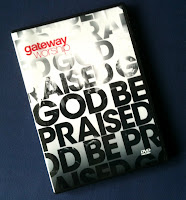
God Be Praised DVD
The God Be Praised DVD (Gateway Worship) has been released ! Fifteen songs from the live recording back in April 2010 along with songwriter commentaries, "behind the scenes" footage, and other features combine for over an hour and a half of music and info from Gateway Church.
Scott Buchanan and Chad Whiteley take turns playing drumset while percussion duties are shared by Mark Levy and noted percussion blogger---ME.
(Chad W. also handles a brief percussion stint on concert bass drum---Look for it.)
For more info: www.IntegrityMusic.com/GatewayWorship

Scott Buchanan and Chad Whiteley take turns playing drumset while percussion duties are shared by Mark Levy and noted percussion blogger---ME.
(Chad W. also handles a brief percussion stint on concert bass drum---Look for it.)
For more info: www.IntegrityMusic.com/GatewayWorship
Saturday, February 19, 2011
Shorthand Mini Chart
Sometimes you just need a small reminder instead of a detailed chart or you have to quickly jot down the roadmap of a tune and your orchestration ideas.
Below is an example of my shorthand mini chart system. The major sections of the form [verse (v), chorus (c), pre-chorus (pc) etc…] are shown with the number of measures in each part. The instrument played (or tacet) is indicated where necessary and any specific rhythms, stops, or hits are notated.
You can probably decode this one:

Below is an example of my shorthand mini chart system. The major sections of the form [verse (v), chorus (c), pre-chorus (pc) etc…] are shown with the number of measures in each part. The instrument played (or tacet) is indicated where necessary and any specific rhythms, stops, or hits are notated.
You can probably decode this one:

Friday, February 4, 2011
Defining A Worship Drummer
 Keith Banks has ministered and recorded with Marco Barrientos, Klaus Kluen, David Luckey, Eddie Coronado, and more…along with teaching drums at Christ For the Nations in Dallas and presenting workshops at worship conferences in Asia, Latin American, and the US. Keith’s DVD, Defining A Worship Drummer is packed with over two hours of teaching (and some fine drumming). Whether you are a percussionist or drumset player, there is plenty of valuable information on this disc. Keith speaks about matters of the heart and head rather that sticks and heads as he discusses the attitude of a worship musician. Head over to his website (http://www.keithbanksmusic.com/), check out a sample, and treat yourself to some fine teaching and music. I’m glad to have this DVD in my library.
 Saturday, January 29, 2011
Rhythm Triangle
Listen to “Barlow Girl” by Superchic[k]. Do you hear that rhythm triangle?
How about “Shackles” by Mary Mary? Yep, it’s there.The sound of rhythm triangle (actual instrument or samples) gives sparkle and drive to electronica, hip-hop, smooth jazz, loops-based compositions as well as being a staple of Brazilian Baion music.
Rhythm Triangle parts are composed of various permutations of open (ringing) and closed (non-ringing) sounds.
This traditional triangolo part is transcribed from the playing of my former student, Pablo Motta from Belo Horizonte, Brazil.  Sometimes I play rhythm triangle holding two beaters in one hand allowing one beater to strike the triangle just before the other . The slight flamming produces a subtle effect different from using a single beater. A standard triangle clip works fine with the clip resting on top of the thumb and index finger. The palm and remaining fingers are used to “squeeze” the triangle for the closed sound.
 Sometimes I play rhythm triangle holding two beaters in one hand allowing one beater to strike the triangle just before the other . The slight flamming produces a subtle effect different from using a single beater. A standard triangle clip works fine with the clip resting on top of the thumb and index finger. The palm and remaining fingers are used to “squeeze” the triangle for the closed sound.
The Trigger Triangle from Rhythm Tech (www.rhythmtech.com/) holds the triangle securely and prevents the slight “after strike movement” that comes with the use of the standard clip. The open/close sounds are controlled easily with just the index finger.
 The One Handed Triangle from Latin Percussion (www.lpmusic.com/) gives the player the ability to play open/close rhythms using a back and forth shaking motion…with one hand!
Monday, January 17, 2011
Percussion Tips Launch
Percussion Tips (my new service to humanity) launches this week ! Quick (140 characters or less) advice on concert, hand percussion, drum set, rudimental, musicianship, etc...
Get it on your computer or phone at:
www.facebook.com/MarkSheltonPerc and www.Twitter.com/MarkSheltonPerc
Get it on your computer or phone at:
www.facebook.com/MarkSheltonPerc and www.Twitter.com/MarkSheltonPerc
Saturday, January 15, 2011
Bongos Anomalous

You’ll find a place for this sound.
Tuesday, January 4, 2011
Caleb Jobe Interview
A product of the award winning percussion program at Colleyville Heritage (TX) High School, Caleb Jobe brings solid playing and creative ideas to his current position as percussionist with Dove award winning artist, Kari Jobe.

I was intrigued with his choices of gear and decided that an interview would be of interest to Percussion For Worship readers.
Mark: How long have you been playing with the Kari Jobe Band?
Caleb: About four years…I’m full time except when I have school obligations (Dallas Baptist University).
Mark: I understand that you’ve played both drumset and percussion in the band.
Caleb: I’ve played a few times on drumset but mainly I play percussion.
Mark: You were telling me about your set-up. It’s rather unique. How about some details?
Caleb: It is pretty unique. There is a 22” X 18” bass drum mounted on a keyboard stand. I play it with timpani mallets. It’s miked in back with a kick drum microphone (SM 91 or similar). I use a 14” X 9” snare drum and there’s also a cajon, a few shakers, and occasionally a glockenspiel.
Mark: How did you arrive at this instrumentation?
Caleb: I used to play a more typical set-up with congas, djemebe, etc… but eventually I wanted to duplicate the loops from the recording. That led me to develop this set-up.
Mark: How’s it working?
Caleb: Most groups that are appearing at events with the KJB are not using a percussionist. So the audience is seeing and hearing a little something different and the reaction is positive.
Mark: What’s your favorite breakfast cereal?
Caleb: …definitely frosted flakes.
Monday, December 27, 2010
Session Prep Pays
Hey Mark,
What would you charge me for recording at my studio for:
A one hour session
A two hour session
A three hour session?
The question came in an email from a producer for whom I had played a couple of live events. After my reply regarding rates, we set a time for recording percussion at his studio.
Later in the week, the producer emailed a “rough recording” of the song. After downloading the tune onto my iPod, I listened to the song several times. The “rough” contained no vocals but as I listened, the form and major melodies began to become apparent to me. It was then easy to make a “skeleton chart” of the song on manuscript paper so that I could mark the measures where the major sections of the song began and ended.
The tap tempo feature on my Boss Dr. Beat DB66 metronome (http://www.bossus.com/) informed me that the song was recorded at a consistent bpm of 95. I set my Beatnik Rhythmic Analyzer (http://www.tuners.com/ ) to 95, grabbed some sticks, and began to warm up. (I wanted to ingrain that tempo and subdivisions into my brain and hands.)
Listening to the recording several more times with the “skeleton chart” and pencil at the ready, some ideas about instrument choices and parts sprang to mind and were added to the paper.
The session was scheduled for 1:00 P.M. so I left my home in time to arrive at the studio by 12:30. The producer seemed grateful that I was early and impressed that I had concocted a chart.
My chart also contained approximate times (min/sec) where major sections started. With this information handy, it was easy to tell the producer/engineer to skip ahead to certain min/sec areas as we recorded, thereby saving time for everyone.
The producer wanted to record parts for several instruments and choose segments to use later as he mixed. The time spent in preparation paid off as we recorded parts for congas, tambourine, shaker, rhythm triangle, Chinese bell tree, suspended cymbal, and more in about 1 ¾ hours.
Certainly there are studio situations when there is no recording (or chart) to study before the session. However, when such materials are available, take advantage of the opportunity to prepare thoroughly.
I think this guy might call me again.
What would you charge me for recording at my studio for:
A one hour session
A two hour session
A three hour session?
The question came in an email from a producer for whom I had played a couple of live events. After my reply regarding rates, we set a time for recording percussion at his studio.
Later in the week, the producer emailed a “rough recording” of the song. After downloading the tune onto my iPod, I listened to the song several times. The “rough” contained no vocals but as I listened, the form and major melodies began to become apparent to me. It was then easy to make a “skeleton chart” of the song on manuscript paper so that I could mark the measures where the major sections of the song began and ended.
The tap tempo feature on my Boss Dr. Beat DB66 metronome (http://www.bossus.com/) informed me that the song was recorded at a consistent bpm of 95. I set my Beatnik Rhythmic Analyzer (http://www.tuners.com/ ) to 95, grabbed some sticks, and began to warm up. (I wanted to ingrain that tempo and subdivisions into my brain and hands.)
Listening to the recording several more times with the “skeleton chart” and pencil at the ready, some ideas about instrument choices and parts sprang to mind and were added to the paper.
The session was scheduled for 1:00 P.M. so I left my home in time to arrive at the studio by 12:30. The producer seemed grateful that I was early and impressed that I had concocted a chart.
My chart also contained approximate times (min/sec) where major sections started. With this information handy, it was easy to tell the producer/engineer to skip ahead to certain min/sec areas as we recorded, thereby saving time for everyone.
The producer wanted to record parts for several instruments and choose segments to use later as he mixed. The time spent in preparation paid off as we recorded parts for congas, tambourine, shaker, rhythm triangle, Chinese bell tree, suspended cymbal, and more in about 1 ¾ hours.
Certainly there are studio situations when there is no recording (or chart) to study before the session. However, when such materials are available, take advantage of the opportunity to prepare thoroughly.
I think this guy might call me again.
Tuesday, December 14, 2010
Mastering The Tables Of Time

On the shuttle ride to the airport, a piece of luggage fell and struck me. (No harm done!) However, the incident started a conversation with another passenger, David Stanoch, author of Mastering The Tables Of Time. Upon departing the bus, David presented me with a copy of his amazing book. Whether beginner or pro, drumset player or percussionist, material abounds to challenge and improve your skills. You’ll find exercises with applications for playing time, coordination, polyrhythms, and soloing. http://www.rhythmelodic.com/
Wednesday, December 1, 2010
How can I play all this...by myself ?!
With Christmas just around the corner and those cantatas and spectaculars looming, you might find yourself looking at a percussion part that was intended to be played by a section and instead…it’s just YOU ! Aside from growing an extra set of arms from your stomach, your next best choice is to figure out what to play and what to delete. You might try to ask the conductor (who is still pre-occupied with that near-mishap with the flying angel at the tech rehearsal). Asking the maestro will sometimes yield a quick, “Just try to play as much as you can.”
Make plans and mark the part before the rehearsal but stay open to any in-the-moment directions from the leader during the rehearsal.
Some parts may be doubled by other instruments.
EX. The timpani line covered by the string bass and /or tuba
EX. Glockenspiel or xylophone playing unison with woodwinds
Those percussion parts are good candidates for deletion.
Certain parts may be providing the driving rhythms.
Try to include these.
Cymbals and triangle give an ensemble sparkle and ring.Look for spots that need that effect.
Some instruments help to set the mood or establish a place.
A tambourine would take precedent over bass drum in an “Eastern European” sounding passage.
If you are playing an arrangement of “I Heard The Bells On Christmas Day” and there is a part for chimes... Play that before anything else.
Nothing gives a military feel better than the snare drum.
To cover multiple instruments, be ready to make some sacrifices.
Play drums with hard plastic mallets so that you can move quickly to that glock lick.
Substitute suspended cymbal for crash cymbals and you can combine that with the snare drum part.
It only requires one hand to play the MOUNTED tambourine; the other is free to play another instrument.
Take care to devise a set-up that will allow you to move quickly and GRACEFULLY from one instrument to another. Sketch the set-up so that you can recreate it at the performance.
Make plans and mark the part before the rehearsal but stay open to any in-the-moment directions from the leader during the rehearsal.
Some parts may be doubled by other instruments.
EX. The timpani line covered by the string bass and /or tuba
EX. Glockenspiel or xylophone playing unison with woodwinds
Those percussion parts are good candidates for deletion.
Certain parts may be providing the driving rhythms.
Try to include these.
Cymbals and triangle give an ensemble sparkle and ring.Look for spots that need that effect.
Some instruments help to set the mood or establish a place.
A tambourine would take precedent over bass drum in an “Eastern European” sounding passage.
If you are playing an arrangement of “I Heard The Bells On Christmas Day” and there is a part for chimes... Play that before anything else.
Nothing gives a military feel better than the snare drum.
To cover multiple instruments, be ready to make some sacrifices.
Play drums with hard plastic mallets so that you can move quickly to that glock lick.
Substitute suspended cymbal for crash cymbals and you can combine that with the snare drum part.
It only requires one hand to play the MOUNTED tambourine; the other is free to play another instrument.
Take care to devise a set-up that will allow you to move quickly and GRACEFULLY from one instrument to another. Sketch the set-up so that you can recreate it at the performance.
Friday, November 19, 2010
God Be Praised / Gateway Worship
God Be Praised (Deluxe) from Gateway Worship is currently #7 on the iTunes Christian & Gospel chart. Thomas Miller, Walker Beach, and the team from Gateway have produced a “live” album with a “really live” feel.

It is an honor to be a part of this recent release. There are ample amounts of percussion from my percussion colleague, Mark Levy and lil' ol' me. Click the widget below for more info (including some samples).
www.gatewaywidget.com
Listen for the rainstick in a couple of spots in “O The Blood.” …that’s me!

It is an honor to be a part of this recent release. There are ample amounts of percussion from my percussion colleague, Mark Levy and lil' ol' me. Click the widget below for more info (including some samples).
www.gatewaywidget.com
Listen for the rainstick in a couple of spots in “O The Blood.” …that’s me!
Monday, November 15, 2010
PASIC 2010
 The Percussive Arts Society International Convention took place last week in Indianapolis. It was four days full of new gear, old friends, networking, inspiring performances, and the fun that can come from a few thousand drummers getting together.
 Here I am with Bart Elliot (Nashville drummer and purveyor of drummercafe.com).
 Since the early 80’s, my headed tambourine of choice has been manufactured by Grover Pro Percussion. Click this link (http://bit.ly/aULTnZ ) to find me at the Grover booth with the Heat-Treated Silver Dry 8” Tambourine.
 Since the early 80’s, my headed tambourine of choice has been manufactured by Grover Pro Percussion. Click this link (http://bit.ly/aULTnZ ) to find me at the Grover booth with the Heat-Treated Silver Dry 8” Tambourine.
Neil Grover (percussionist with the Boston Pops & owner of Grover Pro Percussion) and lil’ ol’ me.
And...I got out of bed and made it over to the 7:00 A.M. Breakfast Meeting of Fellowship of Christian Percussionists.
PASIC 2011 will be held again in Indianapolis. For more info: www.pas.org Monday, November 8, 2010
Mark Tree
More than a one trick pony…
Aren’t you glad that studio musician, Mark Stevens invented the mark tree back in the late 60‘s? Also know as bar chimes, the mark tree can help set an ethereal mood, wash into a half-time section, or sweep the music into a modulation.

The instrument is capable of more than the oft-used stereotypical high to low glissando.
You can…
When you invest in a mark tree, get a long one …and a supply of replacement ties!
Aren’t you glad that studio musician, Mark Stevens invented the mark tree back in the late 60‘s? Also know as bar chimes, the mark tree can help set an ethereal mood, wash into a half-time section, or sweep the music into a modulation.

The instrument is capable of more than the oft-used stereotypical high to low glissando.
You can…
- Glissando low to high
- Glissando using a light touch with a triangle beater
- Start in the middle with both hands and move outward in both directions slowly
- Produce a burst of sound using both hands to quickly set all the cylinders in motion
- Create a wind chimes effect ---gently moving the cylinders into one another
When you invest in a mark tree, get a long one …and a supply of replacement ties!
Subscribe to:
Posts (Atom)

